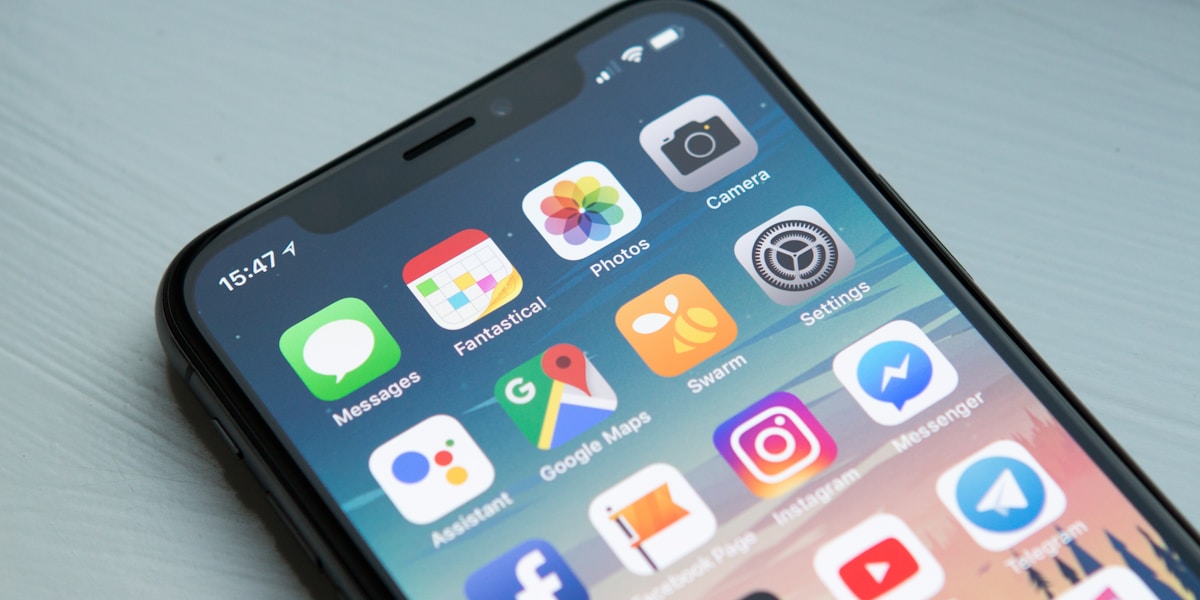

Mobile applications have fundamentally changed how businesses interact with their customers, manage internal operations, and generate revenue. In 2025, the mobile ecosystem continues to evolve at a rapid pace, with new frameworks, design paradigms, and user expectations reshaping what it means to build a successful app. Whether you are a startup founder planning your first product or an enterprise leader modernizing legacy workflows, understanding the current landscape of mobile development is essential for making informed decisions that protect your investment and position your organization for growth.
This guide draws on our team's experience delivering more than 120 mobile applications across industries including healthcare, fintech, logistics, and e-commerce. We will walk through every major phase of the development lifecycle, compare the leading technology approaches, and provide actionable advice that you can apply to your own projects immediately.
Native vs Cross-Platform Development: Choosing the Right Approach
The first and most consequential decision in any mobile project is whether to build native applications for each platform or adopt a cross-platform framework. This choice affects your budget, timeline, team composition, and the long-term maintainability of your codebase. There is no universally correct answer, but there are clear guidelines that can help you make the right call for your specific situation.
Native Development with Swift and Kotlin
Native development means writing separate codebases for iOS using Swift and for Android using Kotlin or Java. Each application is built using the platform vendor's own tools, libraries, and design conventions. The primary advantage of going native is unrestricted access to every platform API, sensor, and hardware feature the moment it becomes available. If your app requires deep integration with the camera system, ARKit, HealthKit, Bluetooth Low Energy peripherals, or platform-specific accessibility features, native development gives you the most direct and reliable path.
Performance is another area where native apps hold a measurable edge. Applications that involve complex animations, real-time data visualization, augmented reality, or intensive computation will generally run more smoothly when compiled directly to the target platform. Games, video editing tools, and financial trading applications are examples where the performance ceiling of native code matters in a tangible, user-facing way.
The tradeoff is cost and velocity. Maintaining two separate codebases requires two specialized engineering teams, and every feature must be implemented, tested, and debugged independently on each platform. For most business applications, this doubles the development timeline and increases the total budget by 60 to 80 percent compared to a cross-platform approach.
Cross-Platform Frameworks: React Native vs Flutter
Cross-platform frameworks allow you to write a single codebase that compiles to both iOS and Android. The two dominant players in 2025 are React Native, maintained by Meta, and Flutter, maintained by Google. Both have matured significantly and are used in production by some of the largest companies in the world.
React Native uses JavaScript and the React component model, which means teams with existing web development expertise can ramp up quickly. It renders using the platform's native UI components, which gives apps an authentic look and feel on each operating system. The ecosystem of third-party libraries is vast, and the community is one of the largest in the mobile development world. Companies like Shopify, Discord, and Bloomberg use React Native for major consumer-facing applications.
Flutter takes a different approach by rendering its own UI using the Skia graphics engine rather than delegating to native platform widgets. This gives developers pixel-perfect control over every visual element and ensures that the app looks identical on both platforms. Flutter uses the Dart programming language, which has a steeper learning curve for teams coming from JavaScript or Swift backgrounds but offers strong typing and excellent tooling. Google, BMW, and Alibaba are among the high-profile companies using Flutter in production.
Framework Comparison Table
| Factor | React Native | Flutter | Native (Swift/Kotlin) |
|---|---|---|---|
| Language | JavaScript / TypeScript | Dart | Swift / Kotlin |
| Code Sharing | 85-95% across platforms | 90-98% across platforms | 0% (separate codebases) |
| UI Rendering | Native platform widgets | Custom rendering engine (Skia) | Native platform widgets |
| Performance | Near-native for most apps | Near-native, excellent for animations | Maximum possible performance |
| Developer Pool | Very large (JavaScript ecosystem) | Growing rapidly | Moderate, platform-specific |
| Hot Reload | Yes | Yes (stateful) | Limited (Xcode previews) |
| Relative Cost | 1x (baseline) | 1x to 1.1x | 1.6x to 2x |
| Best For | Teams with JS/web expertise | Custom UI-heavy apps, startups | Hardware-intensive, platform-specific features |
The Mobile Development Lifecycle
Every successful mobile application follows a structured development lifecycle that moves from initial concept through launch and beyond. Skipping phases or compressing timelines without adjusting scope is the most common cause of project failure. Here is the lifecycle we recommend based on hundreds of projects delivered at React Tech Solutions.
Phase 1: Discovery and Requirements
The discovery phase typically spans two to four weeks and involves stakeholder interviews, competitive analysis, user research, and technical feasibility assessment. The goal is to produce a detailed requirements document, user personas, a feature priority matrix, and an initial technical architecture proposal. We recommend conducting at least five user interviews during this phase, even for B2B applications, because assumptions about user behavior are almost always wrong in important ways that only direct observation can reveal.
Phase 2: Design and Prototyping
Design begins with wireframes that establish the information architecture and user flows. These low-fidelity mockups are the cheapest point at which to identify navigation problems, missing screens, or confusing interactions. Once wireframes are validated through user testing, the design team creates high-fidelity mockups and an interactive prototype. At React Tech Solutions, we use Figma for collaborative design and build clickable prototypes that stakeholders can test on their actual devices before a single line of code is written.
Phase 3: Development Sprints
We follow two-week sprint cycles using an agile methodology tailored for mobile development. Each sprint produces a working increment of the application that can be deployed to a test environment and reviewed by stakeholders. Continuous integration pipelines automatically build, test, and distribute each code change to internal testers. This cadence ensures that problems are caught early and that stakeholders can see tangible progress throughout the project rather than waiting months for a single big reveal.
Phase 4: Quality Assurance and Launch
Quality assurance for mobile applications is significantly more complex than for web applications because of device fragmentation, operating system variations, and network conditions. We discuss testing strategies in detail in a dedicated section below. The launch phase includes app store submission, which requires careful attention to metadata, screenshots, and compliance with platform guidelines. Apple's review process typically takes 24 to 48 hours but can extend to a week for first-time submissions or apps in regulated industries.
UI/UX Design Principles for Mobile
Mobile design is fundamentally different from web design because of the constraints and capabilities unique to handheld devices. The most important principles to internalize are touch target sizing, gesture-based navigation, progressive disclosure, and thumb-zone optimization.
Touch targets should be a minimum of 44 by 44 points on iOS and 48 by 48 density-independent pixels on Android. Anything smaller leads to tap errors that frustrate users and degrade the perceived quality of your application. Spacing between interactive elements is equally important; adjacent buttons should have at least 8 points of padding between them to prevent accidental taps.
Progressive disclosure means showing users only the information and controls they need at each step of a workflow, revealing additional complexity only when they ask for it or when the context demands it. A checkout flow, for example, should present shipping, payment, and confirmation as sequential steps rather than as a single scrolling form with 20 input fields. This approach reduces cognitive load and increases completion rates by 15 to 30 percent according to our internal testing data.
"The best mobile interfaces feel like they anticipate what the user needs next. That sense of effortlessness is not accidental; it is the result of obsessive attention to user flows, tap target sizing, and information hierarchy."
Backend Architecture for Mobile Applications
The backend architecture supporting your mobile app is just as important as the app itself. A poorly designed API layer will create performance bottlenecks, increase battery drain, and make it difficult to add features over time. The two primary API paradigms in 2025 are REST and GraphQL, and each has distinct strengths.
REST APIs are well-understood, widely supported, and easy to cache. They work well for applications with predictable data access patterns where each screen requires a small number of well-defined API calls. If your app primarily displays lists, detail views, and forms, a RESTful architecture will serve you well and is the simpler option to implement and maintain.
GraphQL excels when your app has complex data requirements that vary across screens and user roles. A single GraphQL query can fetch exactly the data a particular screen needs, avoiding the over-fetching and under-fetching problems that plague REST APIs in data-rich applications. Social media feeds, dashboards, and marketplace applications with deeply nested data relationships benefit significantly from GraphQL's flexibility.
Offline-First Architecture
Users expect mobile apps to work even when connectivity is unreliable. An offline-first architecture stores data locally and synchronizes with the server when a connection becomes available. Technologies like SQLite, Realm, and WatermelonDB provide robust local storage options, while conflict resolution strategies such as last-write-wins or operational transformation handle cases where the same data is modified on multiple devices simultaneously. Building offline support from the beginning is far easier than retrofitting it later, so we strongly recommend including it in your initial architecture even if it seems optional at first.
Testing Strategies for Mobile Applications
Mobile testing requires a layered approach that combines automated tests at multiple levels with manual testing on real devices. Our recommended testing pyramid for mobile applications consists of four layers.
- Unit tests cover individual functions, data transformations, and business logic in isolation. They are fast to run and should comprise 60 to 70 percent of your total test count. Both React Native and Flutter have excellent unit testing frameworks built in.
- Integration tests verify that multiple components work together correctly. For mobile apps, this includes testing navigation flows, state management interactions, and API client behavior with mock servers.
- End-to-end tests simulate real user interactions across complete workflows. Tools like Detox for React Native and Flutter's integration test framework allow you to script tap sequences, form submissions, and navigation flows that exercise the full application stack.
- Device testing involves running your application on a representative sample of real physical devices. Cloud device labs such as BrowserStack and AWS Device Farm provide access to hundreds of device and operating system combinations without requiring you to maintain a physical device library.
We recommend achieving at least 80 percent code coverage with unit and integration tests combined. End-to-end tests should cover every critical user path including onboarding, authentication, the primary value-generating workflow, payment processing, and error recovery scenarios.
App Store Optimization: Getting Discovered
Building a great app is only half the battle; users need to be able to find it. App Store Optimization, commonly known as ASO, is the process of improving your app's visibility in the Apple App Store and Google Play Store search results. The core elements of ASO include keyword research, title and subtitle optimization, compelling screenshots and preview videos, and actively managing user ratings and reviews.
Keyword research for ASO follows similar principles to web SEO but with platform-specific nuances. Apple provides a dedicated keyword field limited to 100 characters, while Google Play extracts keywords from your full description. Tools like Sensor Tower and App Annie can help you identify high-volume, low-competition keywords relevant to your app's functionality. Your app title should include your primary keyword naturally while remaining brandable and memorable.
Screenshots are the single most influential factor in conversion from store listing view to download. Your first two screenshots should communicate your app's core value proposition without requiring the user to scroll. Use device frames, concise caption text, and vibrant colors that stand out against the store's white background. A/B testing different screenshot sets can improve conversion rates by 20 to 40 percent.
Post-Launch: Analytics, Monitoring, and Iteration
Launching your app is the beginning of a continuous improvement cycle, not the end of a project. The most successful mobile products invest heavily in post-launch analytics, crash monitoring, and iterative feature development guided by real user data.
Crash reporting tools like Firebase Crashlytics and Sentry provide real-time alerts when users encounter fatal errors, along with detailed stack traces, device information, and the sequence of user actions that led to the crash. Maintaining a crash-free rate above 99.5 percent should be a non-negotiable quality target. Every crash represents a user who may never open your app again.
A/B testing allows you to validate product hypotheses with actual users before committing to permanent changes. Firebase Remote Config and LaunchDarkly enable you to roll out new features to a percentage of your user base and measure the impact on key metrics like retention, engagement, and conversion. We recommend running at least two to three A/B tests per month during the first year after launch to rapidly iterate toward product-market fit.
Understanding Mobile App Development Costs
Cost is often the first question business leaders ask, and the honest answer is that mobile development costs vary dramatically depending on complexity, platform choice, design requirements, and team structure. However, we can provide general ranges based on our experience.
- Simple apps with five to ten screens, basic CRUD functionality, and standard UI components typically cost between $25,000 and $60,000 and take eight to twelve weeks to develop.
- Medium complexity apps with custom UI, third-party integrations, user authentication, push notifications, and offline support range from $60,000 to $150,000 with timelines of three to six months.
- Complex apps involving real-time features, payment processing, advanced animations, machine learning models, or compliance requirements for regulated industries can range from $150,000 to $500,000 or more, with development timelines of six to twelve months.
The factors that most significantly drive costs upward are custom animations, complex backend integrations, support for older operating system versions, regulatory compliance requirements, and the need for real-time synchronization across multiple users or devices.
Security Considerations for Mobile Apps
Mobile security deserves careful attention because smartphones carry sensitive personal and financial data, and mobile networks introduce attack vectors that do not exist in traditional web applications. The key security measures every mobile app should implement include data encryption at rest and in transit, certificate pinning to prevent man-in-the-middle attacks, secure storage for authentication tokens using the platform keychain, biometric authentication where appropriate, and code obfuscation to deter reverse engineering.
Certificate pinning ensures that your app only communicates with your legitimate servers by embedding the expected server certificate or public key directly in the application binary. This prevents attackers from intercepting traffic even if they manage to install a rogue certificate authority on the user's device. Both iOS and Android provide native APIs for implementing certificate pinning, and libraries like TrustKit simplify the process for cross-platform apps.
For applications in healthcare, finance, or government, additional compliance requirements such as HIPAA, PCI DSS, or FedRAMP add both cost and complexity to the development process. These requirements affect everything from how data is stored and transmitted to how the development team manages source code and deployment pipelines. Engaging a security consultant early in the project is significantly less expensive than discovering compliance gaps after launch.
"Security is not a feature you add at the end. It is a property of the entire system that must be designed in from the first architecture discussion. Retrofitting security into a mobile app is three to five times more expensive than building it in from the start."
Looking Ahead: Mobile Development Trends for 2025 and Beyond
Several emerging trends are worth monitoring as you plan your mobile development strategy. On-device machine learning is becoming increasingly practical, with Core ML on iOS and TensorFlow Lite on Android enabling features like real-time image classification, natural language processing, and predictive text without requiring a network connection. Super apps that consolidate multiple services into a single platform continue to gain traction in Asian markets and are beginning to influence Western app design. Progressive Web Apps are narrowing the gap between web and native experiences for content-focused applications, though they remain limited in access to platform-specific hardware features.
The mobile ecosystem in 2025 rewards teams that combine strong technical execution with deep user empathy and disciplined project management. Regardless of which framework or methodology you choose, the principles outlined in this guide will help you navigate the complexity of mobile development and deliver applications that create genuine value for your users and your business.
Frequently Asked Questions
How long does it take to develop a mobile app from scratch?
Development timelines depend on complexity. A simple app with five to ten screens typically takes eight to twelve weeks. Medium-complexity apps with custom features and integrations require three to six months. Complex apps with real-time functionality, payment systems, and compliance requirements can take six to twelve months. These timelines include design, development, testing, and launch preparation but not the initial discovery phase, which adds two to four weeks.
Should I build a native app or use a cross-platform framework?
For most business applications, a cross-platform framework like React Native or Flutter provides the best balance of cost, speed, and quality. Choose native development if your app requires deep integration with platform-specific hardware features, demands maximum performance for graphics-intensive tasks, or targets only one platform. Cross-platform frameworks share 85 to 98 percent of code between platforms, which can reduce your budget by 40 to 60 percent compared to building two native apps.
How much does it cost to build a mobile app in 2025?
Mobile app development costs range from $25,000 for a simple app to $500,000 or more for a complex enterprise application. The primary cost drivers are the number of screens and features, the complexity of backend integrations, custom UI and animation requirements, security and compliance needs, and whether you choose native or cross-platform development. A detailed discovery phase is the best way to get an accurate estimate for your specific project.
What is the difference between React Native and Flutter?
React Native uses JavaScript and renders with native platform widgets, making it ideal for teams with web development experience who want apps that feel native on each platform. Flutter uses the Dart language and its own rendering engine, giving developers pixel-perfect control over the UI and ensuring visual consistency across platforms. Both are production-ready and used by major companies. Your choice should depend on your team's existing skills, your design requirements, and whether visual consistency or platform-native feel is more important for your use case.
How do I ensure my mobile app is secure?
Essential security measures include encrypting all data at rest and in transit using TLS 1.3, implementing certificate pinning to prevent man-in-the-middle attacks, storing sensitive tokens in the platform's secure keychain, using biometric authentication for sensitive operations, obfuscating your code to deter reverse engineering, and conducting regular penetration testing. For apps handling health, financial, or government data, you must also comply with relevant regulations such as HIPAA or PCI DSS, which impose additional requirements on data handling and infrastructure.
Ready to Build Your Mobile App?
Our engineering team has delivered over 120 mobile applications across industries. Schedule a free consultation to discuss your project requirements and get a detailed estimate.